
What Is Peptide Synthesis?
Peptide synthesis is the laboratory process of creating short chains of amino acids linked together by peptide bonds. These chains can mimic naturally occurring sequences or be custom-designed for research. Since peptides play roles in signaling, enzyme activity, and structural biology, synthetic production allows researchers to study them in controlled ways.
How Is It Performed in the Lab?
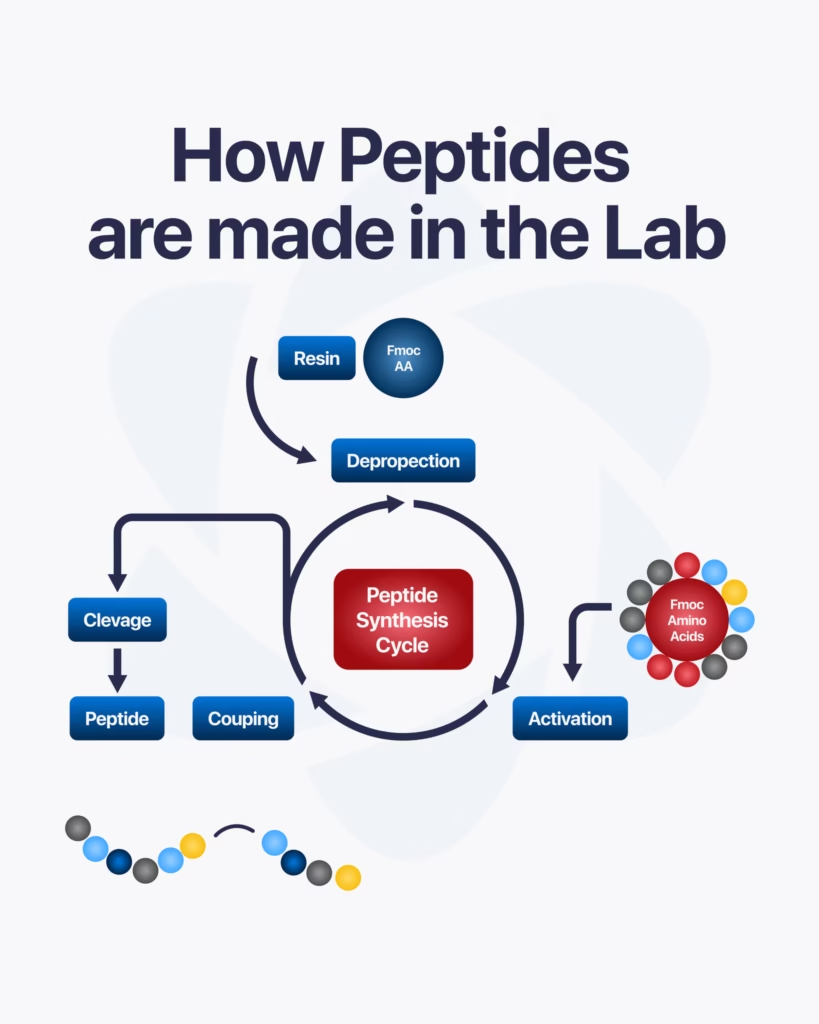
Most modern peptide synthesis uses a method called solid-phase peptide synthesis (SPPS). In this approach, the first amino acid is attached to a solid resin bead, and additional amino acids are added step by step. Each cycle involves:
-
Activation – Preparing the next amino acid for coupling.
-
Coupling – Forming a peptide bond between the growing chain and the new amino acid.
-
Deprotection – Removing protective groups so the chain can continue extending.
Once the sequence is complete, the peptide is cleaved from the resin and purified for research use.
(Reference: Chan & White, 2000)
Key Features of Synthetic Peptide Production
Peptide synthesis offers researchers:
-
Precision – Ability to design exact amino acid sequences.
-
Flexibility – Incorporation of modifications such as non-natural amino acids or labels.
-
Scalability – Production from small milligram amounts for experiments to larger quantities for assays.
-
Purity Control – Products are typically analyzed by HPLC and mass spectrometry to confirm identity and purity.
What Researchers Have Observed
The development of automated synthesizers has greatly improved efficiency, allowing complex peptides to be produced with high reproducibility. Advances in coupling reagents and resin technologies have reduced side reactions and improved yield. Despite these advances, very long or highly hydrophobic peptides remain challenging, often requiring optimization of conditions or specialized chemistries.
References
All products sold by Direct Peptides are strictly for laboratory research purposes only. They are not intended for human or animal consumption, medical, or therapeutic use. The information provided on this website is for educational and informational purposes only.
