
What Is NAD+?
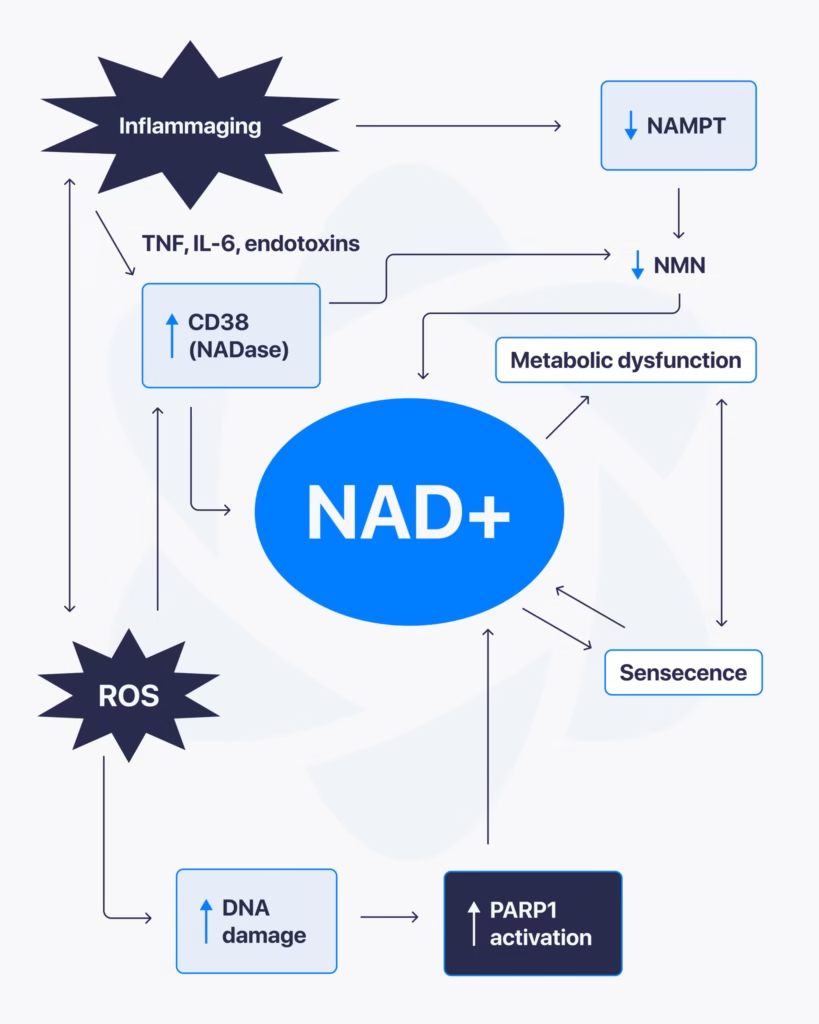
Nicotinamide adenine dinucleotide (NAD+) is a coenzyme found in all living cells. It cycles between oxidized (NAD+) and reduced (NADH) forms, shuttling electrons during cellular reactions. Because it is required for energy production and enzyme activity, NAD+ is considered a central molecule in cellular metabolism.
How Has NAD+ Been Studied?
NAD+ has been examined across multiple levels of research:
-
In vitro assays have explored how NAD+ interacts with enzymes, such as sirtuins and PARPs.
-
Animal models have investigated how NAD+ levels change in tissues during aging, stress, or nutrient shifts.
-
Human studies often measure circulating NAD+ or related metabolites, sometimes in the context of supplementation with precursors like nicotinamide riboside (NR) or nicotinamide mononucleotide (NMN).
(Reference: Covarrubias et al., 2021)
Key Roles of NAD+ in Cells
Research has identified several fundamental roles for NAD+:
-
Energy Production – Serves as a cofactor in glycolysis, the TCA cycle, and oxidative phosphorylation.
-
DNA Repair – Consumed by PARP enzymes during repair of damaged DNA strands.
-
Gene Regulation – Provides substrate for sirtuins, which influence chromatin structure and gene expression.
-
Stress Response – Helps regulate cellular defense systems during oxidative and metabolic stress.
(Reference: Canto et al., 2015)
What Researchers Have Observed
Studies over the last two decades have highlighted consistent patterns:
-
Decline With Age – NAD+ levels are reported to decrease in tissues of animals and humans over time.
-
Tissue Variability – NAD+ concentrations differ between organs, with high demand in energy-intensive tissues such as muscle, brain, and liver.
-
Precursor Response – Trials with NR or NMN supplementation in humans have measured increases in NAD+ metabolites, though results vary by dose and duration.
-
Dynamic Regulation – Environmental stress, diet, and exercise all influence NAD+ turnover, making it a sensitive indicator of metabolic state.
(Reference: Yoshino et al., 2018)
References
All products sold by Direct Peptides are strictly for laboratory research purposes only. They are not intended for human or animal consumption, medical, or therapeutic use. The information provided on this website is for educational and informational purposes only.