
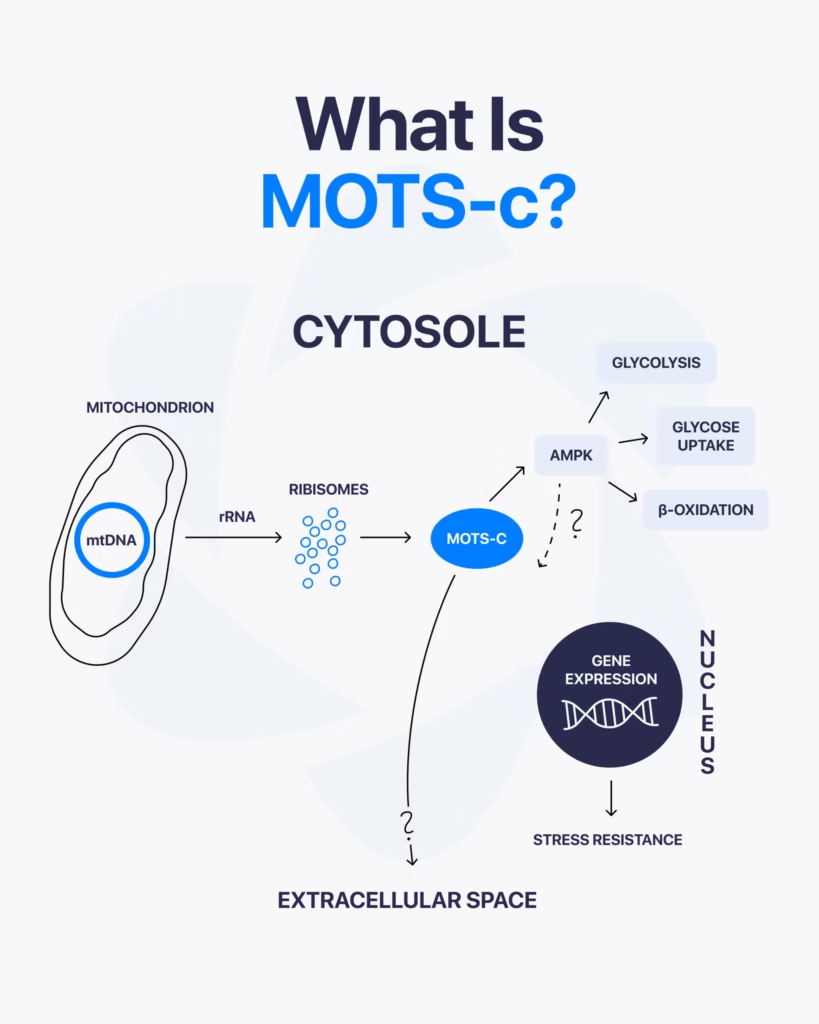
What Is MOTS-c?
MOTS-c (Mitochondrial Open Reading Frame of the 12S rRNA type-c) is a small peptide encoded within the mitochondrial genome. Unlike most peptides, which are coded in nuclear DNA, MOTS-c originates from mitochondrial DNA, highlighting the organelle’s role not only in energy metabolism but also in signaling functions. This discovery has expanded interest in mitochondrial-derived peptides as potential regulators of cellular processes.
How Has MOTS-c Been Studied?
Research on MOTS-c spans in vitro, animal, and human models:
-
Cell culture studies have examined how MOTS-c influences metabolic pathways, including glucose utilization and stress responses.
-
Animal models have been used to explore its role in energy balance, skeletal muscle activity, and mitochondrial function.
-
Human studies have measured circulating MOTS-c levels in contexts such as exercise and aging, providing data on how the peptide behaves under different physiological states.
(Reference: Reynolds et al., 2021)
Key Research Observations
Across published studies, several observations about MOTS-c have emerged:
-
Metabolic Regulation – MOTS-c interacts with pathways related to AMPK signaling and folate metabolism.
-
Stress Response – Levels of MOTS-c change under cellular and environmental stress conditions, suggesting a role in adaptive responses.
-
Age-Related Patterns – Research has noted that MOTS-c concentrations decline with age in some tissues and circulating samples.
-
Exercise Association – Human studies have measured increases in MOTS-c following acute bouts of physical activity.
(Reference: Zempo et al., 2021)
Common Research Applications
MOTS-c is currently studied in laboratory settings to:
-
Investigate mitochondrial-nuclear communication pathways.
-
Analyze changes in peptide signaling during metabolic stress.
-
Explore mitochondrial contributions to age-related cellular changes.
-
Develop models of exercise-induced signaling molecules.
References
All products sold by Direct Peptides are strictly for laboratory research purposes only. They are not intended for human or animal consumption, medical, or therapeutic use. The information provided on this website is for educational and informational purposes only.